

The rising demand for industrial starch as a binder, diluent, excipient, thickening, stabilizing, and gelling agent is driving the global market for the commodity. Growing demand for food and drink is being propelled in part by economies in development. There is a growing demand for industrial starch in the production of packaged, frozen, and convenience foods due to the increasing consumption of these foods. As a result of this trend, the market is expanding. A variety of crops, including maize, potatoes, and wheat, are used to make industrial starch.
The United States enjoys a prominent position as the world's leading producer and exporter of maize. The country's robust industrial sector and plentiful supply of raw materials greatly contribute to the expansion of the domestic market. Industrial starch is in high demand in developing countries like India and China because of the country's booming food and beverage industries. Buyers are motivated by price and quality when making judgments, and there are a lot of manufacturers in the world, thus there are a lot of buyers and not many switching costs. Companies in this industry are using tactics including mergers, expansions, and new product development to solidify their position in the market. Among the label-friendly features offered by tapioca starch is its smooth texture, good water-binding capabilities, and cold-storage stability; this starch is part of Cargill, Incorporated's SimPure range. Industrial starch has plenty of room to grow and penetrate the market in the ever-evolving food and beverage industry, even though it may face competition from other goods including agar, gum Arabic, guar gum, and alginates.
Carbohydrates are plants' primary source of energy; they are abundant in cereal crops and starchy vegetables. Starch is a white, flavorless powder that is processed from a mixture of two different polysaccharides composed of glucose units. Industrial starch is manufactured from a variety of natural ingredients, such as cassava, wheat, corn, potatoes, and other root crops. Coatings and production methods including industrial starch are extensively used in the paper and textile industries. Paper, textiles, mining, building materials, and consumer goods are among the non-food industries that utilize industrial starch. Industrial starch is widely used in the paper industry for coating and manufacturing purposes. Printing and finishing textiles are two of its primary uses in the textile industry. Although the food sector is expected to be the largest end-user, starch and its derivatives are quickly finding use in a diverse variety of end-use applications, such as paper, construction materials, cosmetics, and medications. Aside from that, ingredient producers have a lot of room to maneuver in response to rising demand by taking sensible risks, thanks to the food processing industry's meteoric rise.
Among the most essential biomaterials and food items for a long time, starch is still used extensively in many different industries throughout the world today. Although the food industry has a much higher demand for starch, it is quickly finding new uses in research and development across a wide range of industrial sectors, including textiles, paper, chemicals, agriculture, construction engineering, and healthcare. The starch produced from maize accounts for the bulk of the global total. Used as a thickening, stabilizer, water retainer, and colloidal gelling agent, maize starch is an essential ingredient in many foods around the world. During the projected period, this aspect is expected to increase the MEA starch market. The industrial starch market is being propelled by this aspect.
The increasing demand for food and drink, especially in developing countries like India and China, has led to a rise in the consumption of industrial starch in these regions. What matters most to the buyer is how competitive the price is and how good the product is. Due to numerous producers around the world and low switching costs, buyers have a lot of leverage. The companies in this field have been actively pursuing new product development, mergers, and expansions as means to solidify their position in the market. Take Cargill, Inc.'s March 2021 launch of its SimPure tapioca brand as an example. For a long time, SimPure products primarily used waxy maize and starches derived from potatoes. Tapioca starch renders a silky smoothness, powerful water-binding capabilities, and long-term stability when kept in the fridge.
Report Coverage
Global Industrial Starch research report categorizes the market for global based on various segments and regions, forecasts revenue growth, and analyzes trends in each submarket. Global Industrial Starch report analyses the key growth drivers, opportunities, and challenges influencing the global market. Recent market developments and Industrial Starch competitive strategies such as expansion, product launch and development, partnership, merger, and acquisition have been included to draw the competitive landscape in the market. The report strategically identifies and profiles the key Industrial Starch market players and analyses their core competencies in each global market sub-segments.
| REPORT ATTRIBUTES | DETAILS |
|---|---|
| Study Period | 2017-2031 |
| Base Year | 2023 |
| Forecast Period | 2023-2031 |
| Historical Period | 2017-2021 |
| Unit | Value (USD Billion) |
| Key Companies Profiled | Cargill (US), Archer Daniels Midland Company (US), Ingredion Incorporated (US), Tate & Lyle PLC (UK), Roquette Frères (France), Grain Processing Corporation (US), AGRANA Beteiligungs-AG (Austria), Tereos Starch & Sweeteners (France), Avebe (Netherlands), Südzucker AG (Germany), National Starch LLC (US), Global Bio-chem Technology Group Company Limited (Hong Kong), China Essence Group Ltd. (China), Manildra Group (Australia), AVEBE U.A. (Netherlands), SPAC Starch Products (India), Roquette America, Inc. (US), Universal Starch Chem Allied Ltd. (India), Agristo (Belgium), Aryan International (India). |
| Segments Covered | • By Product |
| Customization Scope | Free report customization (equivalent to up to 3 analyst working days) with purchase. Addition or alteration to country, regional & segment scope |
Key Points Covered in the Report
- Market Revenue of Industrial Starch Market from 2021 to 2031.
- Market Forecast for Industrial Starch Market from 2021 to 2031.
- Regional Market Share and Revenue from 2021 to 2031.
- Country Market share within region from 2021 to 2031.
- Key Type and Application Revenue and forecast.
- Company Market Share Analysis, Industrial Starch competitive scenario, ranking, and detailed company
profiles. - Market driver, restraints, and detailed COVID-19 impact on Industrial Starch
Market
Competitive Environment:
The research provides an accurate study of the major organisations and companies operating in the global Industrial Starch market, along with a comparative evaluation based on their product portfolios, corporate summaries, geographic reach, business plans, Industrial Starch market shares in specific segments, and SWOT analyses. A detailed analysis of the firms' recent news and developments, such as product development, inventions, joint ventures, partnerships, mergers and acquisitions, strategic alliances, and other activities, is also included in the study. This makes it possible to assess the level of market competition as a whole.
List of Major Market Participants
Cargill (US), Archer Daniels Midland Company (US), Ingredion Incorporated (US), Tate & Lyle PLC (UK), Roquette Frères (France), Grain Processing Corporation (US), AGRANA Beteiligungs-AG (Austria), Tereos Starch & Sweeteners (France), Avebe (Netherlands), Südzucker AG (Germany), National Starch LLC (US), Global Bio-chem Technology Group Company Limited (Hong Kong), China Essence Group Ltd. (China), Manildra Group (Australia), AVEBE U.A. (Netherlands), SPAC Starch Products (India), Roquette America, Inc. (US), Universal Starch Chem Allied Ltd. (India), Agristo (Belgium), Aryan International (India).
Primary Target Market
- Market Players of Industrial Starch
- Investors
- End-users
- Government Authorities
- Consulting And Research Firm
- Venture capitalists
- Third-party knowledge providers
- Value-Added Resellers (VARs)
Market Segment:
This study forecasts global, regional, and country revenue from 2019 to 2031. INFINITIVE DATA EXPERT has segmented the global Industrial Starch market based on the below-mentioned segments:
Global Industrial Starch Market, By Type
Native Starch
Starch Derivatives & Sweeteners
Global Industrial Starch market, By Application
Food & Beverages
Corrugation & Paper Making
Animal Feed
Pharmaceuticals
Others
Global Industrial Starch Market, By Source
Corn
Potato
Cassava
Wheat
Others
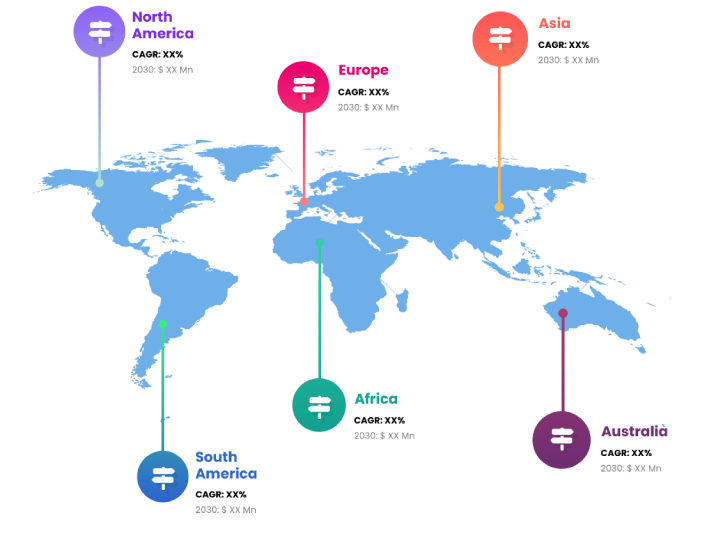
Global Industrial Starch market, Regional Analysis
- Europe: Germany, Uk, France, Italy, Spain, Russia, Rest of Europe
- The Asia Pacific: China,Japan,India,South Korea,Australia,Rest of Asia Pacific
- South America: Brazil, Argentina, Rest of South America
- Middle East & Africa: UAE, Saudi Arabia, Qatar, South Africa, Rest of Middle East & Africa
You will get in-depth and extensive industrial starch market market research and competitor analysis for your business to help you develop more profound insights into the industrial starch market Market.
Through INFINITIVE Data Expert is a professional Market Research services, I will identify the industrial starch market market size, demand & opportunities, growth rate, and target audience with a comprehensive analysis of your competitors.